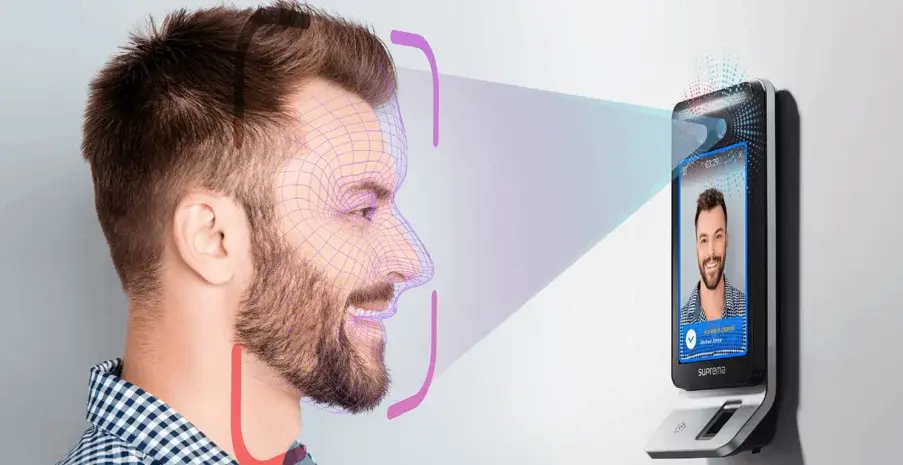
Remote hiring, online interviews and digital onboarding have made recruitment faster and more flexible. They have also introduced new identity risks that many organisations are still learning how to manage.
One increasingly common challenge is identity substitution. A candidate applies and interviews remotely, but a different individual turns up on site. This risk does not stop at recruitment. It can continue into day-to-day operations, affecting time and attendance accuracy, payroll integrity and access to secure areas.
For organisations operating shift-based workforces, multiple sites or high staff turnover, maintaining confidence that the right people are in the right place at the right time has become more complex than ever.
The risk of identity fraud in the workplace
Identity-related issues are often invisible until they cause disruption. When employees clock in for one another or unauthorised individuals gain access to restricted areas, the consequences can be significant.
Common impacts include inaccurate payroll and financial loss, compliance breaches with workforce and safety regulations, increased health and safety risks and damage to organisational trust and reputation.
These risks are not limited to any one sector. They are particularly acute in environments where large numbers of people work rotating shifts, access controlled spaces, or move frequently between sites.
Facial recognition requires careful and responsible use
Facial recognition is not appropriate for every organisation or every workforce. When it is used, it must be implemented transparently and responsibly, with clear policies around consent, data protection and access controls.
For employers, the goal is not surveillance. It is verification, fairness and safety. Used correctly, facial recognition can help organisations confirm identity without relying on easily shared credentials or manual oversight. Used poorly, it can undermine trust and create unnecessary concern.
Any organisation considering facial recognition must ensure employees understand how the technology works, what data is collected, how it is stored and who has access to it. Trust and transparency are essential.
Where facial recognition can help
When implemented thoughtfully, facial recognition can support workforce management in several practical ways.
- Accurate time and attendance
Facial recognition ensures that only the registered individual can clock in or out. This helps prevent buddy punching and protects payroll accuracy, particularly in large or dispersed workforces.
- Secure access control
Access to sensitive or high-risk areas can be limited to verified personnel, reducing the risk of unauthorised entry and improving overall site security.
- Stronger audit and compliance records
Verified attendance and access logs provide a reliable record of who was on site and when. This supports internal audits and helps organisations demonstrate compliance when required.
- Confidence during onboarding
In remote or digital recruitment processes, facial recognition can help confirm that the individual starting work matches their verified identity, reducing the risk of candidate substitution from day one.
Why this matters now
As workforces become more flexible and recruitment processes more digital, identity verification is becoming harder to manage using traditional methods alone.
At the same time, organisations face increasing pressure to maintain compliance, protect safety and ensure fairness without creating friction for employees. Technologies that reduce manual intervention while maintaining clear controls can help bridge that gap, but only when deployed with care.
Facial recognition should never be adopted simply because it is available. It should be used only where it solves a genuine problem and where employees understand and support its purpose.